

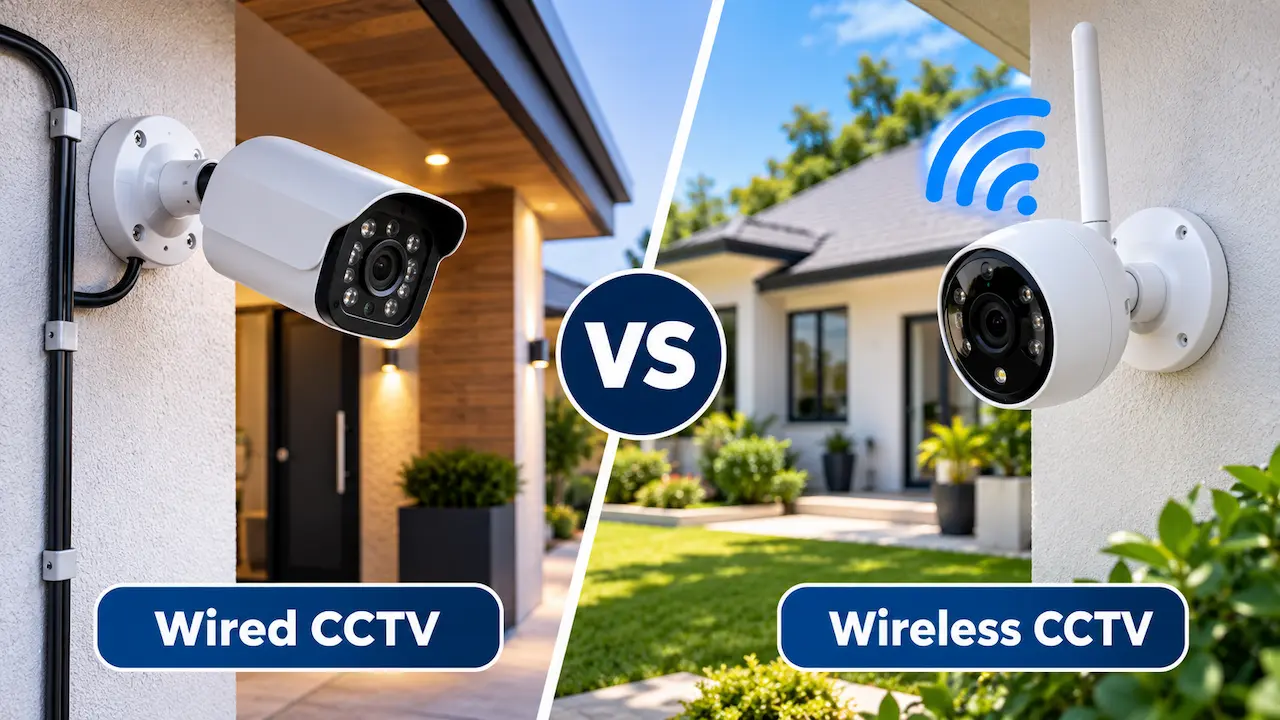
A security camera can help you keep an eye on your home, whether you are at work, away for the weekend, or simply checking who is at the front door. But choosing the right camera system is not always straightforward.
One of the biggest decisions homeowners face is whether to install wired or wireless CCTV cameras.
Both options can provide useful security footage, motion alerts, and remote viewing. However, they differ in installation requirements, connection reliability, power supply, and long-term maintenance.
Understanding these differences is important, especially when protecting your home and belongings.
In this guide, we compare wired vs wireless CCTV cameras, explain their advantages and disadvantages, and help you choose the right security system for your property.
What Are Wired CCTV Cameras?
Wired CCTV cameras connect to a recording device or network through physical cables. Depending on the system, these may be Ethernet cables or coaxial cables.
Many modern wired IP cameras use Power over Ethernet (PoE), which allows one Ethernet cable to carry both data and electrical power from compatible equipment.
This makes wired cameras a popular choice for permanent home security installations.
Footage can be stored on a Network Video Recorder (NVR), Digital Video Recorder (DVR), or another compatible storage system.
Advantages of Wired CCTV Cameras
- Reliable connection: Wired cameras do not depend on WiFi signal strength to transmit footage.
- Continuous recording: Many wired systems support 24/7 recording.
- Stable video transmission: Physical network connections are less affected by wireless interference.
- Centralised storage: Multiple cameras can record to a local NVR or DVR.
- Suitable for permanent installations: Wired systems work well when cameras remain in fixed positions.
Disadvantages of Wired CCTV Cameras
The main drawback of wired CCTV is the installation process.
Running cables through walls, lofts, or external areas may require professional assistance, particularly in existing properties.
Installation costs can also be higher because of the additional cabling and labour involved.
Once installed, moving a wired camera to a different location may require additional work.
However, for homeowners looking for a dependable long-term security system, these installation requirements may be a worthwhile investment.
What Are Wireless CCTV Cameras?
Wireless CCTV cameras transmit video data using WiFi or another wireless connection rather than a dedicated data cable.
These cameras connect to a compatible wireless network and may allow homeowners to view live footage through a smartphone application.
Some wireless cameras require a nearby electrical socket, while others use rechargeable batteries or compatible solar charging accessories.
It is important to understand that wireless does not always mean completely cable-free.
A WiFi camera may still require a power cable, depending on the model.
Advantages of Wireless CCTV Cameras
- Simpler installation: Many wireless cameras require less cabling than wired systems.
- Flexible positioning: Battery-powered models can be easier to relocate.
- Remote monitoring: Many cameras support smartphone viewing and notifications.
- Suitable for smaller properties: A few cameras may provide sufficient coverage without extensive cabling.
- Expandable systems: Compatible cameras can often be added as security needs change.
Disadvantages of Wireless CCTV Cameras
Wireless cameras depend on the quality of their network connection.
If the WiFi signal is weak or unstable, live viewing, notifications, and cloud recording may be affected.
Battery-powered cameras also require charging or battery replacement, depending on their design.
Some wireless systems rely on cloud subscriptions for advanced recording features or extended video storage.
Wireless connections can also experience interference, so proper network configuration and camera positioning are important.
Wired vs Wireless CCTV Cameras: Key Differences
The table below highlights the main differences between the two types of CCTV systems.
| Feature | Wired CCTV Cameras | Wireless CCTV Cameras |
| Connection | Ethernet or coaxial cable | WiFi or another wireless link |
| Installation | Usually more involved | Usually simpler |
| Reliability | Less affected by wireless interference | Depends on signal quality |
| Power supply | Cable, PoE, or separate power | Mains, battery, or solar-assisted |
| Recording | Often supports continuous local recording | Depends on model and power source |
| Maintenance | Usually low after installation | Battery models need regular attention |
| Camera relocation | May require new cabling | Generally easier |
| Initial cost | Can involve higher installation costs | Often lower for simple DIY setups |
| Best suited for | Permanent, multi-camera security | Flexible or smaller installations |
Both options can provide high-quality footage. Camera resolution, lens quality, lighting, and recording settings matter more than whether the connection is wired or wireless.
Which CCTV System Is More Reliable?
Reliability is one of the most important factors when choosing home security cameras.
A camera is only useful if it captures and stores footage when something happens.
Reliability of Wired CCTV
Wired CCTV cameras generally provide a more consistent data connection because they do not rely on WiFi coverage.
This can be particularly useful for cameras positioned around the outside of a property, where thick walls and distance from the router may weaken wireless signals.
Wired systems can also support continuous recording without depending on battery life, provided they have a suitable power supply.
However, wired cameras are not immune to problems. Damaged cables, equipment faults, or power failures can still interrupt recording.
Reliability of Wireless CCTV
Wireless cameras can perform well when installed within a strong and stable network.
Problems are more likely when cameras are positioned far from the router or behind thick external walls.
For example, a camera installed above a garage may experience connection issues if the WiFi signal struggles to reach that part of the property.
If your cameras regularly disconnect, understanding the causes of home WiFi connection problems can help identify whether the issue comes from router placement, interference, or inadequate coverage.
For larger properties, improving the network may be necessary before installing additional wireless cameras.
Are Wired CCTV Cameras More Secure Than Wireless Cameras?
Both wired and wireless CCTV cameras can be secure when properly installed and configured.
Wired cameras have an advantage because their video transmission does not depend on a wireless signal that could experience radio interference.
However, wired IP cameras may still be exposed to cybersecurity risks if their network or remote access settings are poorly configured.
Wireless cameras introduce additional considerations because they communicate over a wireless network.
Using strong passwords, modern WiFi encryption, updated firmware, and two-factor authentication where available can help reduce security risks.
For homes with several connected devices, network segmentation and VLAN configuration can provide an additional layer of protection by separating compatible CCTV equipment from personal computers and other devices.
The overall security of a CCTV system depends on more than its connection type. Device configuration, software updates, account protection, and physical security all matter.
Wired vs Wireless CCTV Cameras for Outdoor Home Security
Outdoor cameras face different challenges from indoor security cameras.
They must withstand changing weather conditions while maintaining clear coverage of entrances, driveways, gardens, and other vulnerable areas.
Wired CCTV for Outdoor Areas
Wired CCTV is often suitable for permanent outdoor installations.
For example, cameras covering a driveway, rear garden, and side entrance can connect to a central recording system.
This arrangement can provide consistent recording without depending on WiFi coverage at every camera location.
However, cables must be installed safely and protected against moisture, accidental damage, and tampering.
Wireless CCTV for Outdoor Areas
Wireless cameras can be useful where running cables is difficult or where flexible placement is important.
Battery-powered cameras may be suitable for monitoring a shed, garden entrance, or another location without an easily accessible power supply.
However, battery life can vary significantly depending on recording activity, temperature, and camera settings.
Before choosing either option, homeowners should consider the camera’s weather-resistance rating, night vision performance, viewing angle, and storage options.
For more information about camera positioning and installation requirements, read our home CCTV installation guide.
How Much Do Wired and Wireless CCTV Cameras Cost in the UK?
The cost of a CCTV system depends on the number of cameras, recording features, installation requirements, and equipment quality.
A simple wireless camera setup may have a lower initial cost because it requires less cabling.
A professionally installed wired system may cost more initially, particularly when cables must be routed through an existing property.
The following are broad illustrative equipment price ranges rather than installation quotations.
| CCTV Equipment | Indicative UK Price |
| Basic wireless CCTV camera | £30–£100 |
| Higher-specification wireless camera | £100–£250+ |
| Basic wired CCTV camera | £40–£150 |
| Multi-camera wired CCTV kit | £200–£700+ |
| Premium multi-camera system | £700+ |
Actual prices vary by brand, features, retailer, and recording equipment. Professional installation and any necessary cabling are additional costs.
Wireless systems may also involve ongoing cloud storage subscriptions, while local recording systems may require replacement hard drives or other maintenance over time.
Comparing the total cost over several years can provide a more realistic picture than looking at the initial purchase price alone.
Which CCTV Cameras Are Better for Large Homes?
Larger homes often require cameras in several locations, including front entrances, driveways, side passages, and rear gardens.
In these situations, a wired CCTV system may be more practical because multiple cameras can connect to a central recorder without relying on wireless coverage across the entire property.
A wired system can also be easier to manage when continuous recording is a priority.
However, some homes benefit from a combination of wired and wireless cameras.
For example, permanent cameras could cover the main entrances, while a battery-powered camera monitors an area where running cables would be difficult.
The best arrangement depends on the property’s layout and the areas that need monitoring.
Professional home network infrastructure and structured cabling can also support CCTV systems alongside other connected devices.
What Should You Consider Before Installing CCTV at Home?
Choosing the right camera technology is only one part of planning a home security system.
Before purchasing equipment, consider the following factors.
1. Camera Placement
Cameras should cover important entry points while avoiding unnecessary blind spots.
A camera positioned too high or too far from an entrance may capture movement without providing enough detail to identify someone.
2. Night Vision
Outdoor security cameras should provide usable footage in low-light conditions.
Infrared night vision, sensor quality, and available lighting all influence image quality after dark.
3. Recording and Storage
Decide whether you prefer local storage, cloud recording, or a combination of both.
Check how long footage can be retained and what happens when storage reaches capacity.
4. Remote Access
Many CCTV systems allow homeowners to view footage through a mobile app.
Remote access should be configured securely, with strong authentication and up-to-date software.
5. Privacy and UK CCTV Rules
Domestic CCTV may fall under UK data protection requirements when cameras capture areas beyond your property boundary, such as neighbouring gardens or public pavements.
Homeowners should position cameras carefully, minimise unnecessary recording, and understand their responsibilities before installation.
The Information Commissioner’s Office provides guidance on domestic CCTV use in the UK.
Is Professional CCTV Installation Worth It?
DIY wireless cameras can be suitable for straightforward home security requirements.
However, professional installation becomes more valuable when a property requires several cameras, extensive cabling, secure remote access, or reliable recording across multiple areas.
An installer can assess the property, identify suitable camera positions, and recommend equipment based on the coverage required.
Professional installation can also help prevent common problems such as poor camera angles, unreliable connections, exposed cabling, and incorrectly configured recording settings.
For homeowners who want a complete security solution rather than individual cameras, planning the system properly can make a significant difference.
Professional CCTV Installation in Essex by HomeIT Services
Every home has different security requirements.
A small property in Southend-on-Sea may need cameras covering the front entrance and rear garden, while a larger home in Chelmsford could require a more extensive system.
At HomeIT Services, we help homeowners across Essex choose and install CCTV systems suited to their property and security needs.
Our CCTV installation and access control services include camera positioning, system configuration, network integration, and remote viewing setup.
We consider how your security cameras will work with your existing home network, helping you choose between wired, wireless, or combined installations.
Whether you are installing CCTV for the first time or upgrading an existing system, we can help you find a practical and reliable solution.
Need CCTV Installation for Your Home?
Protect your property with a professionally planned security camera system.
Contact HomeIT Services to discuss your requirements and get advice on the right CCTV setup.
Get in Touch With HomeIT Services
Call: 01702 668090
Frequently Asked Questions
Are wired CCTV cameras better than wireless cameras?
Wired CCTV cameras are generally more suitable for permanent installations requiring stable connections and continuous recording. Wireless cameras offer greater installation flexibility and may be sufficient for smaller properties.
Do wireless CCTV cameras work without the internet?
Some wireless cameras can record locally without an internet connection, depending on their design. However, remote viewing, cloud storage, and notifications may require internet access.
Can wired CCTV cameras work without WiFi?
Yes. Wired cameras can transmit footage through Ethernet or coaxial cables without using WiFi. Remote viewing may still require a properly configured network and internet connection.
Do wireless CCTV cameras need electricity?
Yes. Wireless cameras require power, either through an electrical connection, rechargeable batteries, or a compatible solar-assisted system.
Can CCTV cameras record continuously?
Many wired systems support continuous recording. Some mains-powered wireless cameras also offer this feature, while battery-powered cameras commonly use motion-triggered recording to conserve energy.
Which CCTV system is best for a house in Essex?
The best system depends on your property size, camera locations, recording requirements, and budget. Wired CCTV is often suitable for permanent multi-camera installations, while wireless systems can work well for smaller or flexible setups.
Final Thoughts
Choosing between wired vs wireless CCTV cameras depends on how you want to protect your home.
Wired systems are generally a strong choice for permanent installations where connection reliability and continuous recording are priorities.
Wireless cameras provide flexibility and simpler installation, making them useful for smaller homes or locations where cabling is difficult.
However, neither option is automatically better for every property.
Camera placement, recording quality, storage, network security, and installation quality all influence how effectively a CCTV system protects your home.
For homeowners across Essex, HomeIT Services provides professional CCTV installation and home networking support to help create a dependable security setup.
Contact HomeIT Services to discuss your home security requirements.