

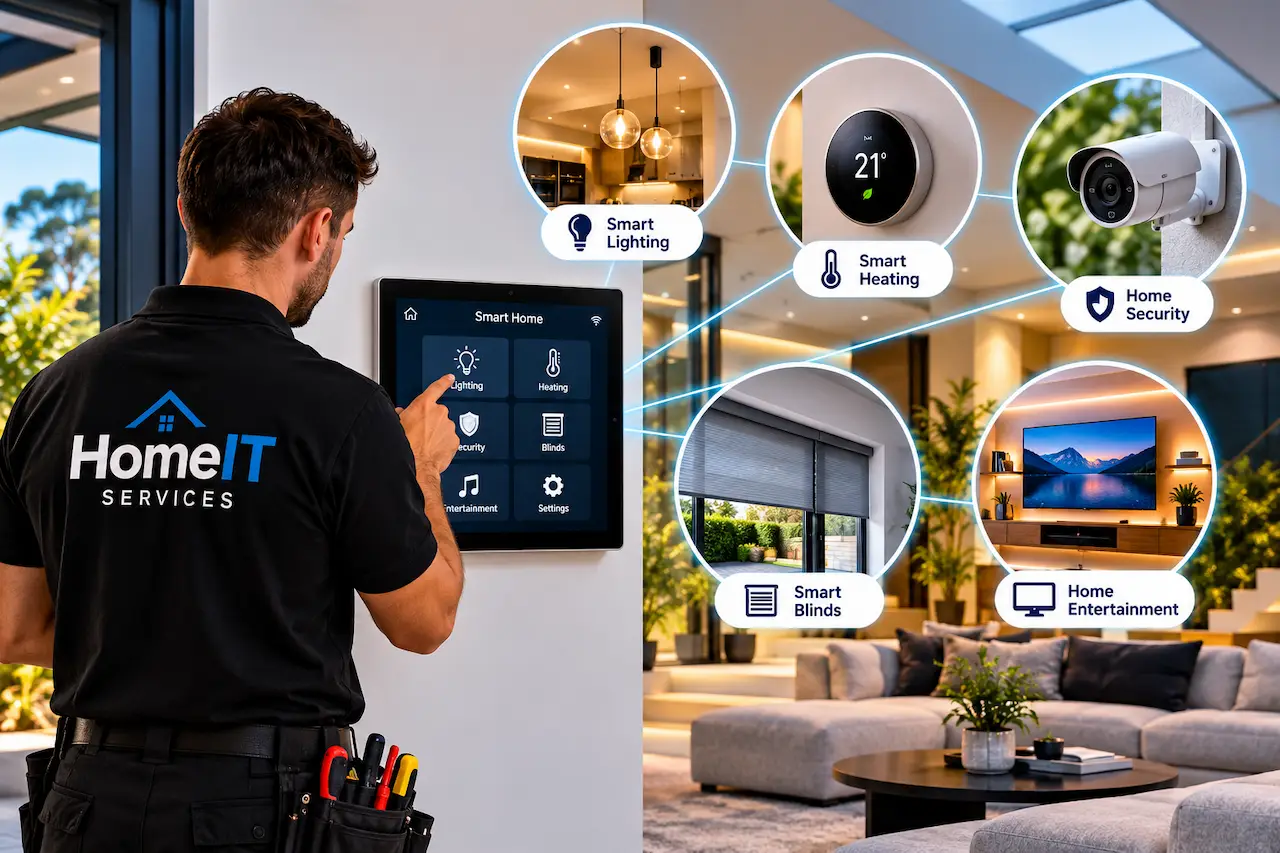
Smart home technology is changing how homeowners manage their properties. From controlling lighting with a smartphone to adjusting heating remotely and monitoring security cameras, modern home automation offers convenience, flexibility, and greater control over everyday household systems.
Choosing reliable home automation installers Essex homeowners can trust is important when upgrading smart lighting, heating, security and connected home systems.
However, installing several smart devices does not automatically create a reliable smart home. Different products may use separate applications, wireless networks, and communication standards. Without proper planning, devices can disconnect, automation routines may fail, and systems can become difficult to manage.
This is why choosing experienced home automation installers in Essex is important.
Professional installers can help homeowners select compatible equipment, establish reliable connections, and configure devices around their daily routines.
Whether you live in Chelmsford, Brentwood, Southend-on-Sea, or another part of Essex, understanding how home automation works can help you make better decisions before investing in new technology.
This guide explains what home automation installers do, which systems they can install, what affects installation costs, and how to choose the right specialist for your property.
What Do Home Automation Installers Do?
Home automation installers design, configure, and integrate connected technology within residential properties.
Their work can range from setting up a smart thermostat to connecting lighting, entertainment, security, and networking equipment into a coordinated system.
A professional installation generally begins with understanding the homeowner’s requirements.
For example, one household may want automated lighting and heating schedules, while another may need security cameras, video doorbells, and remote access to connected devices.
An installer can assess existing equipment, identify compatibility requirements, and recommend suitable solutions.
The objective is to create a system that is straightforward to operate, reliable during everyday use, and practical to maintain.
For homeowners considering a complete upgrade, professional smart home automation services in Essex can help bring different technologies together.
Why Choose Professional Home Automation Installers Essex Homeowners Can Trust?
Many smart home products advertise simple installation. Although individual devices may be easy to connect, integrating several products can introduce additional challenges.
Device Compatibility
Smart home equipment may use WiFi, Bluetooth, Zigbee, Thread, or other communication technologies.
Some products require dedicated hubs, while others connect directly to the home network.
An experienced installer can check compatibility before installation and help avoid purchasing devices that cannot provide the intended functionality.
Reliable Connectivity
Smart home equipment depends on stable communication.
If wireless coverage is weak, smart cameras may disconnect, voice commands may respond slowly, and automated routines may become unreliable.
Professional installation considers the network infrastructure supporting the devices.
Security and Privacy
Connected devices can contain microphones, cameras, account credentials, and information about household activity.
Correct configuration helps protect this information through secure passwords, firmware updates, and appropriate access permissions.
Easier Everyday Operation
A well-designed smart home should simplify daily routines rather than introduce unnecessary complexity.
Professional installers can help organise devices, create practical automation schedules, and explain how the system works.
1. Smart Lighting Installation
Smart lighting is one of the most accessible ways to introduce home automation.
Connected lighting systems allow homeowners to control compatible bulbs, switches, and lighting circuits using mobile applications, voice assistants, or automation schedules.
What Can Smart Lighting Do?
Smart lighting can support several useful functions.
Lights may switch on automatically when movement is detected, dim during evening hours, or follow schedules based on household routines.
Some systems allow homeowners to create different lighting scenes for working, relaxing, or entertaining.
Smart lighting can also be controlled remotely, depending on the equipment and configuration.
Professional Smart Lighting Setup
A professional installer can help determine whether smart bulbs, connected switches, or a combination of both is most appropriate.
This matters because some smart switches require specific wiring arrangements or compatible lighting equipment.
Any work involving fixed electrical wiring should be carried out by a suitably competent electrical professional.
For larger properties, installers may also recommend a dedicated smart home hub to manage multiple devices efficiently.
2. Smart Heating and Thermostat Installation
Smart heating systems allow homeowners to manage compatible heating equipment through connected controls.
Depending on the system, homeowners may be able to adjust temperatures remotely, create heating schedules, or control different zones independently.
Benefits of Smart Heating
Smart heating can improve convenience by allowing temperatures to follow household routines.
For example, a system may reduce heating during periods when nobody is home and increase it before occupants return.
Some products also provide energy usage information and reports.
However, potential energy savings depend on the property, insulation, heating system, existing controls, and how the equipment is used.
Choosing a Compatible Thermostat
Not every smart thermostat works with every heating system.
Compatibility can depend on the boiler, heating controls, wiring, and existing installation.
Before purchasing equipment, homeowners should confirm that the proposed thermostat supports their heating system.
Installation involving electrical or heating-system connections should be handled by appropriately qualified professionals.
3. Smart Home Security and CCTV Integration
Home security is another popular reason homeowners invest in automation.
Modern systems can combine cameras, video doorbells, motion sensors, smart locks, and connected alarms.
These technologies may provide notifications when activity is detected and allow homeowners to review selected areas remotely.
CCTV and Video Doorbells
Security cameras can help monitor entrances, driveways, and gardens.
Depending on the system, footage may be stored locally, through a cloud subscription, or using a combination of both.
Camera positioning, lighting, storage capacity, and network reliability all influence performance.
Professional home CCTV installation planning can help homeowners choose suitable camera locations and understand the available recording options.
Smart Locks and Access Control
Smart locks can provide alternative ways to manage access to a property.
Some systems support temporary access codes, smartphone unlocking, or activity notifications.
However, homeowners should consider physical lock security, battery requirements, compatibility, and emergency access before choosing a system.
The aim should be convenient access without compromising the property’s security.
4. Voice Control and Smart Home Assistants
Voice assistants can provide a convenient way to operate compatible connected devices.
Depending on the chosen ecosystem, homeowners may be able to control lighting, adjust heating, or activate automation routines through spoken commands.
Popular platforms include Amazon Alexa, Google Home, and Apple Home.
Why Compatibility Matters
Not every connected device supports every voice assistant.
Some devices require additional hubs, bridges, or integrations before they can communicate with a particular platform.
An installer can help homeowners select products that work within their preferred ecosystem.
Creating Practical Voice Routines
Voice routines can combine several actions.
For example, a bedtime command might switch off selected lights, adjust compatible heating controls, and activate supported security settings.
The available functionality depends on the devices, their integrations, and the chosen automation platform.
5. Home Networking for Smart Automation
A reliable home network is the foundation of a dependable smart home.
As the number of connected devices increases, routers and wireless access points must support additional connections.
A household with several security cameras, smart televisions, laptops, and automation devices may place considerable demands on its network.
Why WiFi Coverage Matters
Smart devices are often installed in locations where wireless coverage is weakest.
Video doorbells may be positioned outside thick external walls, while cameras might be installed near garages or garden buildings.
Weak coverage can cause delayed notifications, intermittent connectivity, or unavailable video feeds.
Before installing multiple devices, homeowners should consider whether their existing network provides suitable coverage.
Professional home network infrastructure installation in Essex can help establish reliable connectivity for current and future equipment.
Wired vs Wireless Connections
Wireless networking provides flexibility, but wired Ethernet connections can offer greater consistency for compatible fixed equipment.
For example, network-connected CCTV recorders and wireless access points may benefit from dedicated cabling.
A combination of wired and wireless technology is often suitable for larger homes.
6. Home Entertainment Automation
Home automation can also improve the way entertainment equipment operates.
Connected televisions, streaming devices, speakers, and compatible lighting systems can sometimes be managed through shared controls.
Multi-Room Audio
Multi-room audio systems allow compatible speakers to play music in selected rooms.
Homeowners may be able to play the same audio throughout the property or choose different content for separate areas.
The available options depend on the speaker ecosystem and network configuration.
Automated Entertainment Scenes
A compatible entertainment setup may support routines that dim lights, activate selected equipment, and adjust connected devices.
These features can reduce the need to manage several applications or remote controls individually.
Professional configuration is particularly useful when integrating equipment from different manufacturers.
How Much Does Home Automation Installation Cost in Essex?
Home automation installation costs vary depending on the equipment, property layout, and level of integration required.
A simple smart lighting setup will usually involve less work than a whole-home automation system with multiple rooms, cameras, heating controls, and network upgrades.
Several factors influence the final price.
| Installation Type | Main Cost Factors |
| Smart lighting | Number of devices, switches, and wiring requirements |
| Smart heating | Thermostat compatibility and installation complexity |
| CCTV integration | Camera quantity, recording equipment, and cabling |
| Voice assistant setup | Number of devices and integrations |
| Whole-home automation | Property size, system design, and programming |
| Network upgrades | Access points, Ethernet cabling, and equipment |
Equipment costs may be separate from installation charges.
Some smart home products also require ongoing cloud storage or subscription payments.
Before approving a project, request a quotation that explains the equipment, installation work, configuration, and any recurring costs.
DIY vs Professional Home Automation Installation
Many smart home devices are designed for homeowners to install independently.
For example, connecting a compatible smart plug or speaker may only require a mobile application and a stable internet connection.
However, more advanced systems can benefit from professional planning.
| DIY Installation | Professional Installation |
| Suitable for simple standalone devices | Useful for integrated systems |
| Lower initial labour costs | Includes specialist configuration |
| Homeowner manages troubleshooting | Technical support may be available |
| Limited system planning | Considers compatibility and infrastructure |
| Suitable for basic automation | Better suited to complex installations |
Professional installation becomes particularly valuable when several systems must work together or when network changes are necessary.
It can also help homeowners avoid unnecessary purchases and configuration mistakes.
How to Choose the Best Home Automation Installers in Essex
Choosing a suitable installer requires careful consideration of experience, communication, and technical knowledge.
The most expensive option is not automatically the best, and the cheapest quotation may not include everything required.
1. Check Relevant Experience
Look for experience with the technologies you want to install.
A provider familiar with smart home networking, security cameras, automation platforms, and connected devices can offer more complete guidance.
2. Ask About Device Compatibility
A professional installer should explain whether proposed products will work together.
They should also identify any additional hubs, controllers, or network equipment required.
3. Discuss Network Requirements
Reliable connectivity should be considered before adding multiple smart devices.
Ask whether your current WiFi network is suitable or whether improvements are recommended.
4. Understand Ongoing Costs
Some automation systems involve subscription charges for storage, remote services, or additional features.
Make sure these costs are clear before purchasing equipment.
5. Request Clear Installation Details
A quotation should explain what equipment will be installed, which services are included, and whether configuration and testing are part of the work.
6. Consider Local Support
Working with a local specialist can make property assessments and future appointments easier to arrange.
For example, homeowners seeking home IT support in Chelmsford may benefit from access to residential technology specialists familiar with local property requirements.
Common Mistakes to Avoid When Installing Home Automation
One common mistake is purchasing smart devices without checking compatibility.
Another is overlooking the quality of the existing WiFi network.
Even expensive devices can perform poorly when their connections are unreliable.
Homeowners should also avoid using default passwords, neglecting software updates, and installing cameras without considering privacy.
It is equally important to plan for future changes.
Choosing equipment that supports recognised standards and offers reliable manufacturer support can make future expansion easier.
A properly planned installation should meet today’s requirements while allowing reasonable flexibility for additional devices.
Home Automation Installers in Essex: Why Choose HomeIT Services?
At HomeIT Services, we understand that smart home technology should make everyday life easier.
Our approach focuses on practical solutions that work with your property, existing equipment, and requirements.
With over 30 years of IT experience, we help homeowners understand their technology options and build reliable connected environments.
Whether you are interested in smart lighting, home networking, CCTV integration, or connected devices, we can help assess the technical requirements and recommend an appropriate setup.
We support residential technology needs across Essex, including Chelmsford, Brentwood, Southend-on-Sea, and surrounding areas.
Rather than recommending unnecessary equipment, our focus is on dependable connectivity, straightforward configuration, and systems that homeowners can manage confidently.
Planning a Smart Home Installation in Essex?
If you are considering smart home technology or struggling with unreliable connected devices, HomeIT Services can help you explore suitable options.
From improving WiFi coverage to configuring compatible automation equipment, we provide practical residential IT support.
Contact HomeIT Services today to discuss your property and smart home requirements.
Get in Touch With HomeIT Services
Frequently Asked Questions
What do home automation installers in Essex do?
Home automation installers configure and integrate compatible smart devices, including lighting, heating controls, security equipment, voice assistants, and connected home systems.
How much does home automation installation cost?
Costs depend on the equipment, number of devices, property size, and installation complexity. A tailored quotation provides a more accurate estimate than a general price range.
Can I automate my existing home?
Yes. Many smart home technologies can be installed in existing properties without extensive renovation. Some systems may require additional networking equipment or professional electrical work.
Does home automation require fast internet?
Many smart devices require a reliable network connection, but not every function needs high internet speeds. Cameras and cloud-based services may have greater bandwidth requirements than basic lighting controls.
Can different smart home brands work together?
Some products can communicate through shared platforms, compatible hubs, or standards such as Matter. However, compatibility varies, so it should be checked before purchasing equipment.
Is professional smart home installation worth it?
Professional installation can be worthwhile for complex systems, multiple connected devices, network upgrades, or homeowners who prefer expert configuration and troubleshooting.
Can smart home systems be expanded later?
Many systems support additional compatible devices. Choosing suitable infrastructure and equipment from the beginning can make future expansion easier.
Final Thoughts
Home automation can make residential technology more convenient, flexible, and easier to manage.
However, successful installation requires more than purchasing smart devices.
Compatibility, network reliability, security, and everyday usability all influence how well a connected home performs.
Choosing experienced home automation installers in Essex can help homeowners plan suitable systems, avoid common mistakes, and make informed technology decisions.
Whether you are starting with a few connected devices or considering a larger automation project, the right planning can make a significant difference.
For professional guidance on smart home technology and residential networking, contact HomeIT Services to discuss your requirements.